
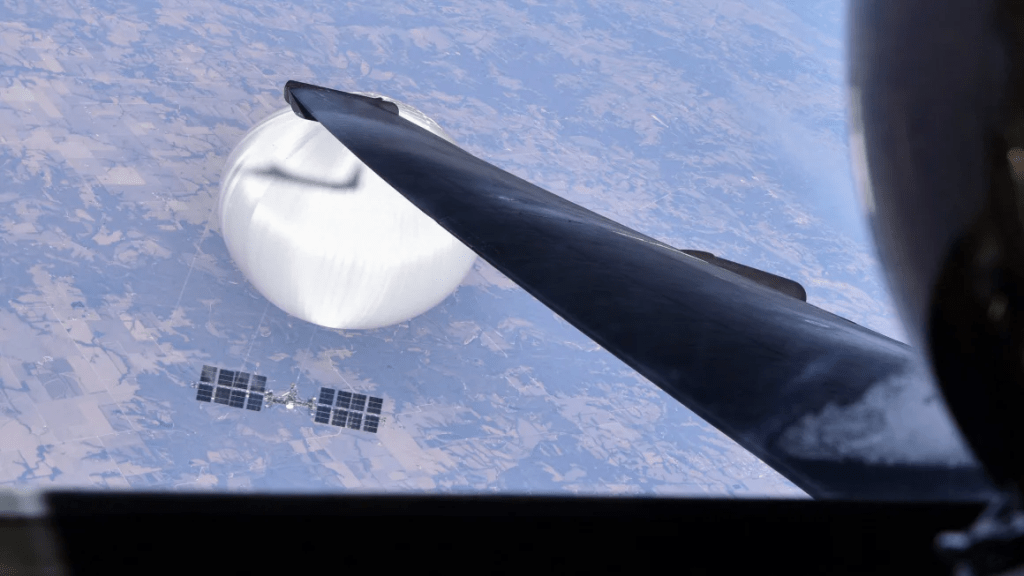
When a Chinese surveillance balloon drifted into US airspace last year, it stoked mass hysteria triggering denunciations from Washington and denials from Beijing. After the balloon was destroyed, observers lamented that bilateral relations were at their lowest point in decades. Even worse, the fiasco caused the cancellation of Secretary of State Tony Blinken’s visit to Beijing, and few speculated that any US officials would be visiting China in the near future. But that summer, there were more meetings between US and Chinese officials than in the previous two years, including Secretary Blinken’s much awaited encounter with Foreign Minister Qin Gang.
Similarly, global climate progress was mixed, with final data confirming that 2023 was both the hottest year on record and the first in which global surface temperatures exceeded 1.5C above pre-industrial levels. But on the upside, COP28 saw the establishment of a much needed “loss and damage” fund and concluded with an explicit call for a “transition away from fossil fuels,” the first COP decision to ever use such language.
But although the situation has marginally improved for both climate action and US-China relations, major obstacles remain. Indeed, as Brookings scholar Patricia Kim, noted, the key focus of recent US-China meetings has been managing the risks of competition rather than promoting cooperation, and the new status quo rests on a precarious foundation which could be easily shaken.
On the upside, COP28 saw the establishment of a much needed “loss and damage” fund and concluded with an explicit call for a “transition away from fossil fuels,” the first COP decision to ever use such language.
In this light, it’s unlikely that recent bilateral pledges to cooperate on climate will deliver much, especially considering that the climate envoys of both countries recently stepped down, taking their close relationship with them. Luckily for the Earth, however, geopolitical history has shown that interstate competition is just as capable of producing results as cooperation, when managed properly. (see box Was the moon a balloon?).
Was the moon a balloon?
During the Cold War, competition between the US and USSR produced notable positive spillovers. Most significantly, the arms race that terrified millions also fueled the Space Race that laid the groundwork for modern technologies.
The same engine that propelled Sputnik into orbit was months prior used to launch a missile demonstrating Moscow’s capacity to deliver a nuke anywhere on Earth. In 1958, a shocked President Dwight D. Eisenhower established the Advanced Research and Projects Agency which would develop the precursor to the Internet in 1969, and that same year he created the National Aeronautics and Space Administration (NASA), to put a man into orbit.
By 1961, the Soviets again bested the Americans by launching cosmonaut Yuri Gagarin into orbit, prompting President John F. Kennedy to double NASA’s funding, and commit to putting a man on the moon within the decade. When that goal was achieved in 1969, NASA’s budget was scaled back. Nevertheless, the impact of the Space Race has persisted, such as through NASA’s technology transfer program which has developed improved renewable energy storage and nature-based solutions to pollution.
In the present-day, similar competitive trends are playing out, though thankfully without the threat of nuclear annihilation. Nowhere is this competition more visible than development programs, with China’s globe-spanning Belt and Road Initiative (BRI) catching the eye of American policymakers. Ever since BRI was unveiled in 2013, it has been condemned by Washington, which accuses Beijing of practicing “debt trap diplomacy” and warns developing nations against participating. But after realizing that many in the Global South like having options besides Uncle Sam, American policymakers began to respond in kind by scaling up their own development initiatives.
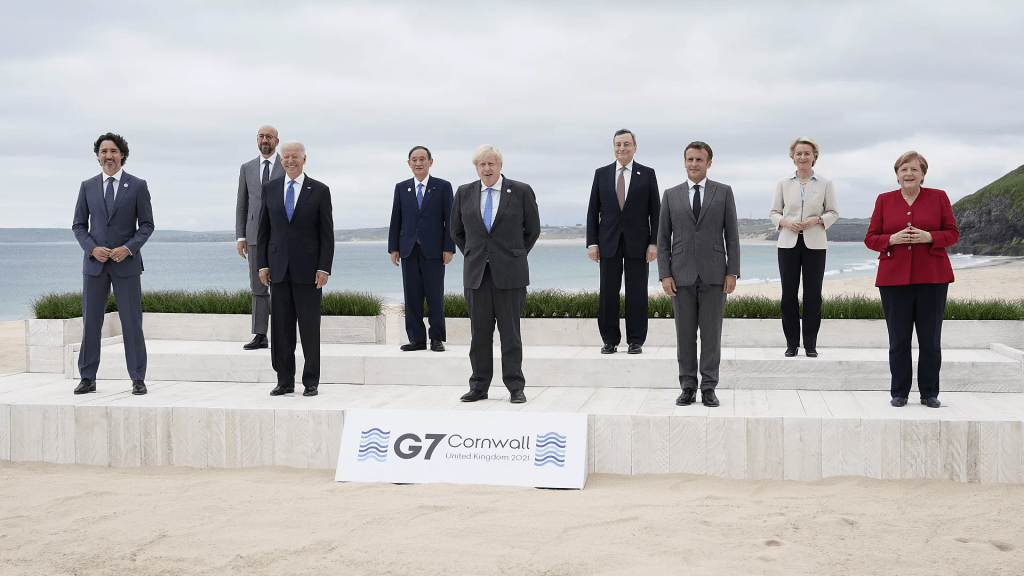
During the 2021 G7 summit, the US launched the Build Back Better World (B3W) initiative to generate over $40tn in infrastructure investment across the developing world by 2035. In a White House press briefing, B3W was framed as a “values-driven, high-standard, and transparent infrastructure partnership led by major democracies” designed for “strategic competition with China.”
China, meanwhile, has already begun adjusting its behavior. In 2022, Beijing’s financial regulators published new lending guidelines to ensure that environmental risks are minimized both domestically and internationally.
Although Washington’s critiques of BRI are often hyperbolic, it is true that the initiative has been far from perfect. For instance, a 2021 study found that contracts between foreign governments and Chinese state-owned lenders often included confidentiality clauses preventing borrowers from disclosing agreement terms or acknowledging the existence of any debts. Another 2023 paper published in Nature Ecology & Evolution determined that over 60% of Chinese development projects “overlap with critical habitats, protected areas, or Indigenous lands,” and such projects posed greater risks than their World Bank counterparts.
China, meanwhile, has already begun adjusting its behavior. In 2022, Beijing’s financial regulators published new lending guidelines to ensure that environmental risks are minimized both domestically and internationally. These guidelines are not perfect and have already been criticized for falling short, but they are an improvement over the previous rules and explicitly call for lenders to “actively support” a greener BRI. Furthermore, the guidelines allow for stakeholders besides lenders and borrowers to voice their grievances on BRI projects, by calling on banks and insurance companies to establish response mechanisms for projects that could be environmentally or socially risky.
When cooperation is largely unfeasible, healthy competition can be fruitful if properly managed.
Time will tell if US-China competition yields positive spillovers similar to those seen during the Space Race, but thus far the prospects are encouraging. One big advantage of our generation is that Beijing and Washington are far too interdependent to form separate spheres of influence and threaten apocalyptic global conflict. Certainly, competition between Washington and Beijing could have negative side effects, or even turn deadly, especially in regard to China’s “red line” issues like reunifying Taiwan. The key insight from history and present-day instances of great power competition is not that competition is desirable in its own right, but that when cooperation is largely unfeasible, healthy competition can be fruitful if properly managed.
Imagine the possibilities if Washington established a “climate NASA” with a competitive spirit and funding equivalent to the Space Race, with the goal of beating Beijing to net zero or outdoing China in global renewable energy investment? Maybe future historians will see BRI as another Sputnik moment and write of the “Green Race” that averted the climate crisis and unleashed a new wave of technology.
But enough imagining for now – let the competition begin.
*Note: this article was originally published in The Mint Magazine*
 Menu
Menu 
Leave a comment